
How did it feel to have someone believe in your potential?
For me?
It’s the weight off my shoulders, in the hands of those who offer help with things that feel impossible.
It’s the stilling of my mind, in the words of those who offer reassurance.
It’s warmth, in the hearts of those who have believed in me.
It’s thriving, when friends, family and colleagues cheer me on.
Building Positive Relationships
Our relationships matter. Those who gently hold your potential, until you can see it in yourself. Those who quietly steer your ‘I can’t’ mindsets into an ‘I can’.
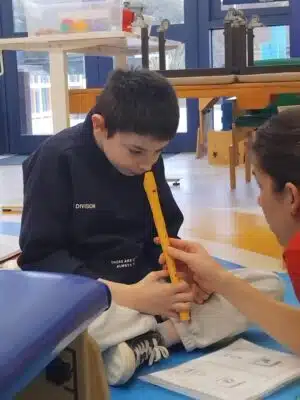
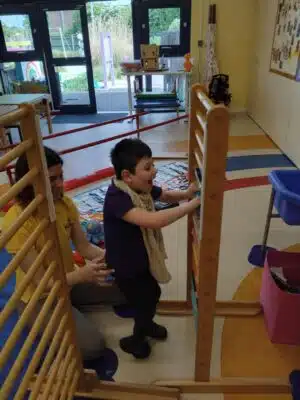
Within Conductive Education (CE), we strive to build these trusting relationships with the children and adults we work with. This is a concept we call Intelligent Love – a belief in the learner’s potential and their abilities, rooted in mutual trust and positive relationships.
Intelligent Love is a vital part of the learning environment – a co-created, carefully curated, positive atmosphere. It is a foundation for learning, an ‘I’m here for the duration’ relationship, and at the core for developing a sense of security, safety and belonging.
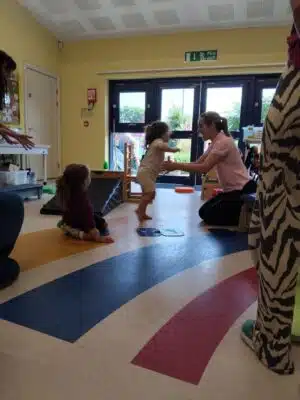 Dr Mária Hári describes the Human Principle as the relationship between the learner, the Conductor and the environment, and how these work together to achieve learning. During my training, I learnt that this process looks at the ‘unseen’ elements: the relationships formed between Conductors and learners, as opposed to the physical aspects you might see in the room such as the facilitation and equipment we use.
I would like to argue that you can see the relationships.
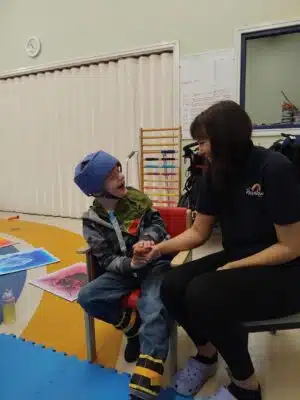 You can see it in the way our non-verbal children’s faces light up when we greet them, the way an unsettled child calms in our arms.
You can see it in our provision – the carefully selected objects, toys and equipment best suited to motivate the children, best equipped to meet their individual needs.
You can see it in our team’s discussions around the welfare of the children, the carefully checked risk assessments; how we want the best for them.
You can see it in the dancing at the discos, the inclusion of each developmental stage, the way we adapt our energy to provide calming or enthusiastic motivation depending on what the child needs.
And this is how learning can occur – in a safe, supportive environment. Through Intelligent Love, we challenge the learner, supporting them to try something new. We use the ‘Zone of Proximal
Development’ as our guide to nurture growth and development of skills, providing enough challenge to stretch them with our assistance to help them reach a solution.
Intelligent Love in a Group Setting
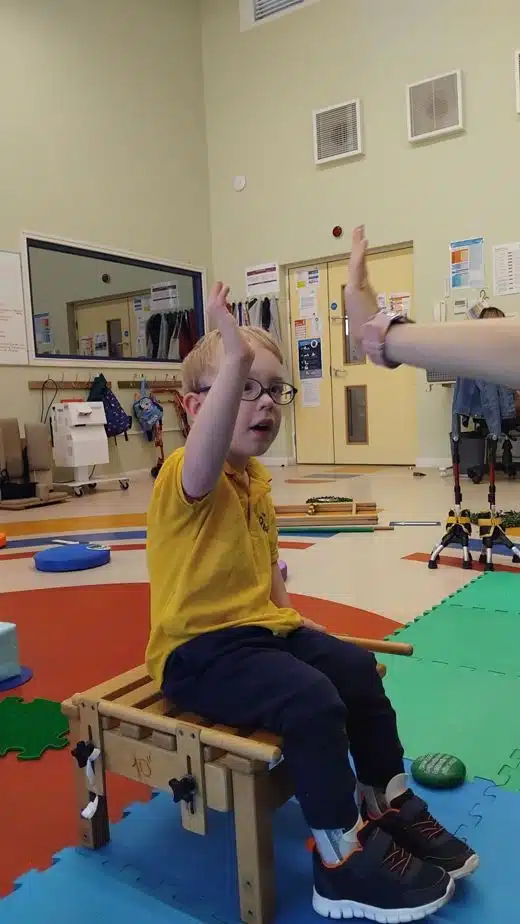 James House, a professor who visited the Pető Institute where CE began, witnessed Intelligent Love at play and stated, ‘intelligent love constantly opens up avenues to ability’. He saw how children delight in each other’s successes as much as their own, and constantly encourage each other, confident in their potential.
Our group settings are the perfect example of how Intelligent Love occurs between the children. Those who notice when their peer is away that day, or late. Children who shuffle over to their friends to greet them, or gesture towards another. Those who model and mimic each other’s movements and behaviours – the good and the bad! They often join in clapping for each other as we celebrate each person’s successes that day. And how great does that feel? When we share in and celebrate achievements with our peers.
Intelligent Love is where we are free to be our true selves with those we trust.
Intelligent Love is where we are offered the space to try, to learn, to grow.
Intelligent Love is when someone says, ‘I believe in you’, and you start to believe in you too.